

Updated: 10/13/26
Planning to visit the Tamar Project in Fernando de Noronha? This guide is your key to an unforgettable experience. Discover why this "living laboratory" is a global leader in sea turtle conservation, how your visit makes a difference, and get all the practical tips you need on tickets, hours, and the best times to go.
🌐 Este artigo também está escrito em Português. Questo articolo è scritto anche in Italiano.
IN THE ARTICLE
- WHAT IS THE TAMAR PROJECT IN FERNANDO DE NORONHA?
- MORE THAN A VISIT: WHY YOUR TRIP MATTERS
- MEET THE STARS: THE SEA TURTLES OF FERNANDO DE NORONHA
- PLAN YOUR PERFECT VISIT TO TAMAR PROJECT
- BEYOND THE VISITOR CENTER: SWIMMING WITH TURTLES IN FERNANDO DE NORONHA
- FREQUENTLY ASKED QUESTIONS ABOUT TAMAR PROJECT
Imagine the crystal-clear waters of a Brazilian paradise, where ancient sea turtles glide gracefully beneath the waves. This isn't just a dream; it's a daily reality at Fernando de Noronha, an island that serves as a vital sanctuary. But the story here is bigger than just beautiful beaches—it's a story of survival, science, and community.
A visit to the Tamar Project Fernando de Noronha is more than just a tourist stop; it's a unique opportunity to step inside a world-renowned conservation effort and connect with nature on a profoundly meaningful level. In this guide, you'll get an insider's look at what makes Tamar Project so special, plus all the practical information you need to plan a seamless and impactful visit, from the best time to see nesting turtles to how your ticket supports their mission.
Ready to dive in? Use our table of contents to jump to the section you need most!
LISTEN TO THE PODCAST VERSION OF THE ARTICE
NORONHA WEATHER
WHAT IS THE TAMAR PROJECT IN FERNANDO DE NORONHA? A LIVING LABORATORY
At first glance, Tamar Project might seem like a charming seaside attraction. But step inside, and you'll quickly realize you're in the heart of one of the most successful marine conservation programs in the world. This isn't just a place to see turtles; it's a place that is actively saving them.
FROM A SMALL START TO A GLOBAL MISSION
Tamar Project, a clever blend of the Portuguese words for sea turtle (tartaruga marinha), was born in the 1980s out of a critical need. All five of Brazil's sea turtle species were teetering on the brink of extinction.
Tamar's mission was bold and clear: use research, conservation, and community involvement to turn the tide.
According to Projeto TAMAR's official data, published in partnership with Google Arts & Culture, Tamar now protects approximately 1,100 km of Brazilian coastline across 19 research stations in nine states.
The base in Fernando de Noronha, established in 1984, quickly became one of its most vital outposts. Why? According to Tamar's lead biologists, the transparent waters here create a "laboratory within nature." These perfect conditions allow for unparalleled research on turtle biology and behavior in their natural habitat, making the island a global hub for sea turtle conservation in Brazil.
THE VISITOR EXPERIENCE: MUSEUM, TANKS, AND TALKS
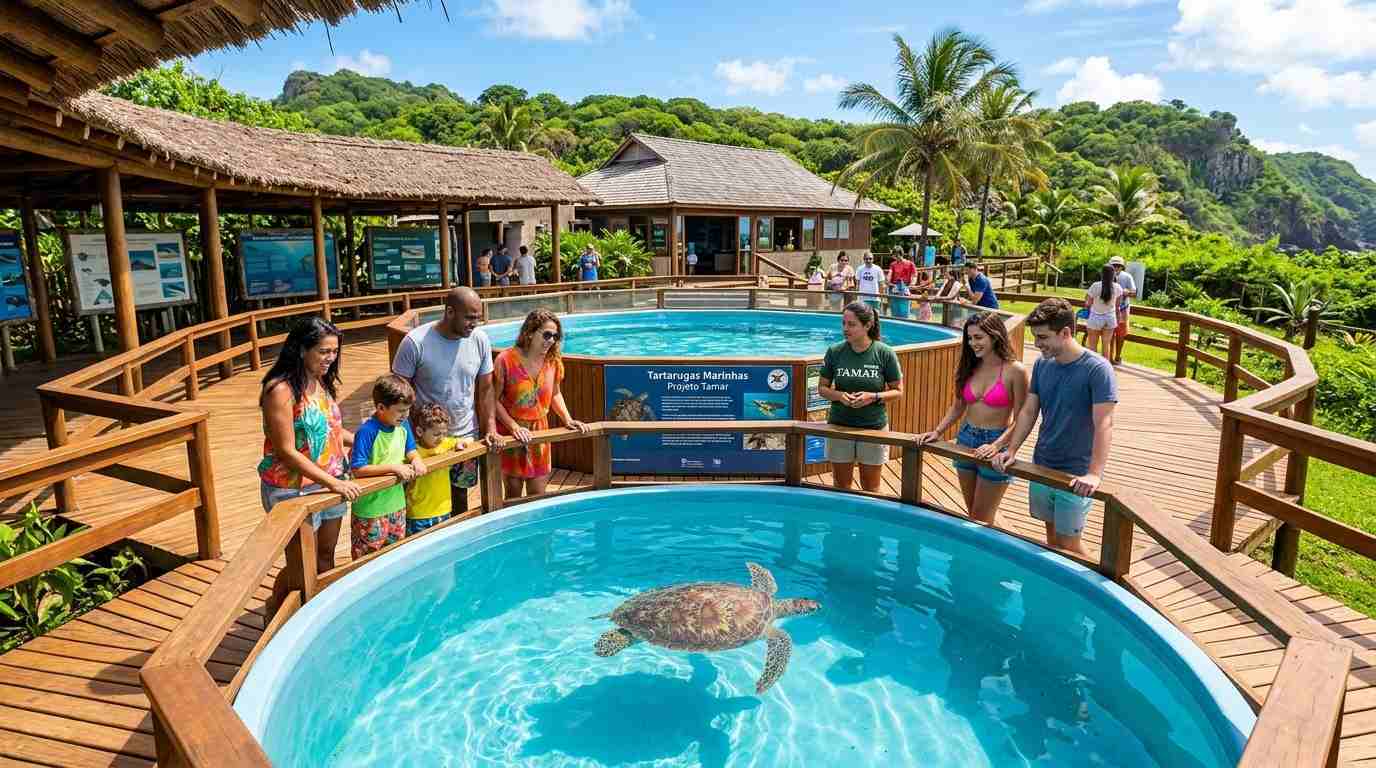
The Tamar Project visitor center is designed to be an engaging and educational experience for everyone. As you wander through, you'll find the Sea Turtle Museum Fernando de Noronha, filled with fascinating interpretative panels and life-size replicas that bring the world of these ancient mariners to life.
The main draw for many are the large tanks and aquariums, where you can observe different turtle species at various stages of their life cycle. It's one thing to read about a hawksbill turtle, but it's another to see its beautifully patterned shell up close. Here's what you'll find inside:
- 600,000 liters of saltwater tanks and aquaria featuring marine fauna from the region and four of the five sea turtle species found in Brazil, displayed at different life-cycle stages.
- Interpretive panels and life-size turtle replicas that walk you through each species' biology, threats, and recovery progress.
- A multimedia cinema and video room screening documentaries about Tamar's research and the archipelago's marine ecosystem.
- A permanent photographic exhibition showcasing over four decades of fieldwork imagery.
- A cultural events area hosting performances by national, international, and local artists — making this a cultural hub, not just a science exhibit.
As one recent visitor shared: "I thought it would just be a few tanks, but the passion of the staff and the story of their work was truly inspiring. A must-do!"
Rated 4.6 stars across 1,523 reviews on TripAdvisor, the visitor center consistently earns praise for its educational depth and family-friendly atmosphere.
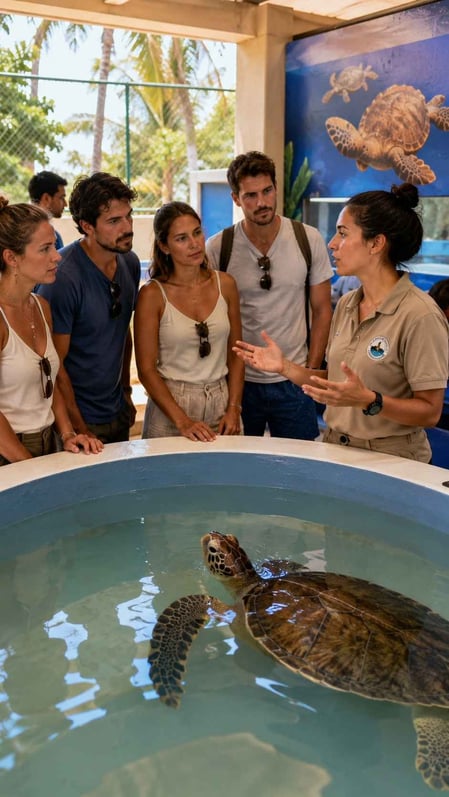
Be sure to check the schedule for daily talks and feeding times, where biologists share incredible insights into their work with these endangered species.
But a visit here is about more than just seeing turtles in tanks; it's about actively participating in their survival.
Related Story: VISIT SUESTE BEACH: THE ULTIMATE AUTHENTIC TRAVEL GUIDE
MORE THAN A VISIT: WHY YOUR TRIP SUPPORTS ECO-RESPONSIBLE TRAVEL IN BRAZIL
In a world where we all want our travels to be more meaningful, a visit to Tamar Project is a perfect example of tourism that gives back. This isn't just an activity; it's an investment in the future of the ocean and the local community.
ECOTOURISM WITH A PURPOSE
Every real you spend on your entrance fee or on a souvenir from the gift shop is a direct contribution to the cause. This money funds critical research, nest monitoring on the beaches, environmental education, and the rehabilitation of sick or injured turtles. Your visit helps ensure that this vital work continues. The success of these efforts is clear. Today, thanks to community involvement and visitor support, an incredible 95% of sea turtle nests are protected in their original location.
This model of Fernando de Noronha ecotourism is a shining example of eco-responsible travel in Brazil. The project beautifully aligns with the mission to add value to local communities and respect ecosystems. In a mini case study of success, the very first partners Tamar hired were former turtle hunters, or tartarugueiros. By providing them with alternative livelihoods as turtle protectors, Tamar transformed the local economy and created a powerful conservation alliance that respects and incorporates the traditional knowledge of the fishing community. You can learn more about how to support Tamar Project directly on their website.
The incredible creatures you're helping to protect are the true stars of the show. Let's meet them.
LISTEN AND TRAVEL TO NORONHA
MEET THE STARS: THE SEA TURTLES OF FERNANDO DE NORONHA
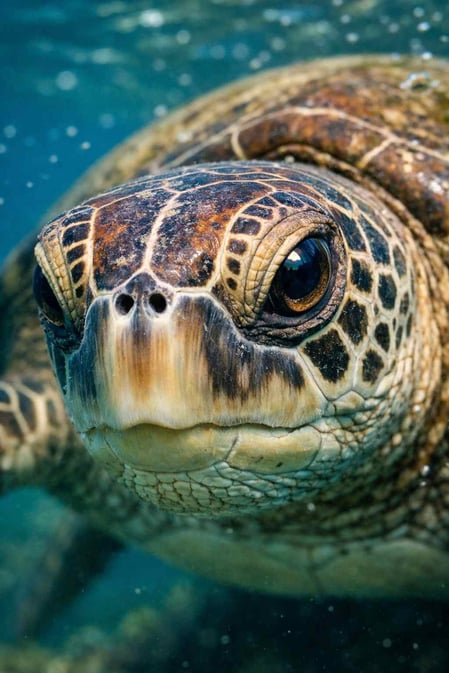
The waters around Fernando de Noronha are a superhighway for marine life, but the sea turtles are undoubtedly the main event. Your visit gives you a chance to meet some of the five endangered species that call the Brazilian coast home.
THE FIVE SPECIES OF BRAZIL
Brazil is a crucial habitat for five types of sea turtles: the Green, Hawksbill, Loggerhead, Olive Ridley, and Leatherback. While you might see several species at the visitor center, the most prominent resident in the wild here is the Green Turtle (Chelonia mydas).
- Green Turtle: Named for the color of its body fat, this herbivore loves to graze on the seagrass around the islands.
- Hawksbill Turtle: Known for its stunning, tortoiseshell-patterned carapace and narrow, bird-like beak.
- Loggerhead Turtle: A large turtle with a powerful jaw perfect for crushing the shells of its prey.
- Olive Ridley Turtle: Named from the olive color of its heart-shaped shell, which is made up of five to nine pairs of ossified lateral plates.
- Leatherback Turtle: Lack of a bony shell; instead, its carapace is covered by oily flesh and flexible, leather-like skin, for which it is named.
Of the five species, the Green Turtle population has found a stable sanctuary here thanks to controlled human activity and dedicated conservation.
THE MAGIC OF NESTING SEASON
If you want to witness something truly unforgettable, plan your trip around the sea turtle nesting season. For oceanic islands like Fernando de Noronha, this magical window runs from December to June. This is the best time to see turtles in their most natural and vital state.
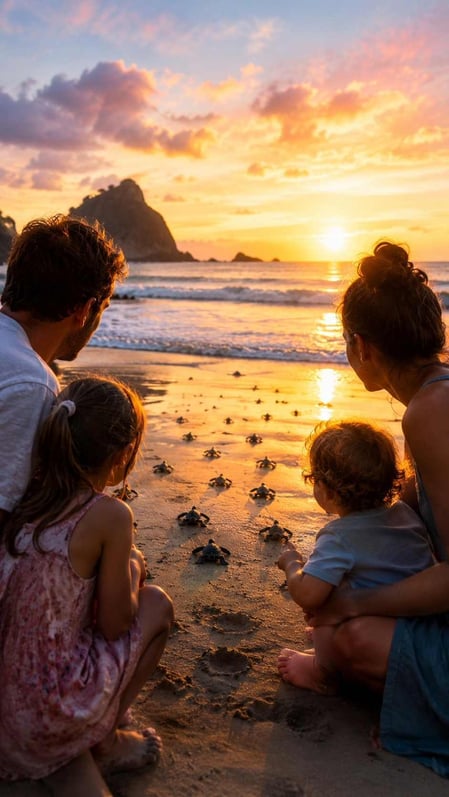
During these months, female turtles make their way onto the beaches at night to lay their eggs. While witnessing this is rare and must be done with a certified guide to ensure the turtles are not disturbed, visiting during this season gives you the best chance of seeing something equally moving: a baby turtle release.
As one traveler gushed: "We visited in February and got to witness a release of baby turtles. It was the most moving experience of our entire trip to Brazil!"
Inspired by Brazil's incredible wildlife? Here’s everything you need to know to plan your visit.
PLAN YOUR PERFECT VISIT TO THE TAMAR PROJECT FERNANDO DE NORONHA
Planning your visit is simple. The center is easily accessible and offers a fantastic experience that fits perfectly into any island itinerary. Here are the key details to get you started.
KEY INFO: HOURS, TICKETS, AND LOCATION
| Detail | Information |
| Location: | Alameda do Boldró, s/n, Fernando de Noronha. It's located in the village of Boldró, close to the ICMBio headquarters. |
| Opening Hours: | The visitor center is typically open daily, closing around 8 PM. However, hours can vary, so it's always best to check the official Tamar website for the most current times. |
| Tickets & Cost: | A modest entrance fee is required, and every cent goes directly to conservation. Prices can change, so we recommend checking their official site or asking at your pousada for the latest pricing. |
| How to Get There: | The most popular way to explore the island is by renting a dune buggy. Taxis are also available. If you're staying in the Boldró or Floresta Nova area, it's a pleasant walk. |
To make it easier to find your way while on the go, save the exact location of the Tamar Project on Google Maps on your phone to plan your route.
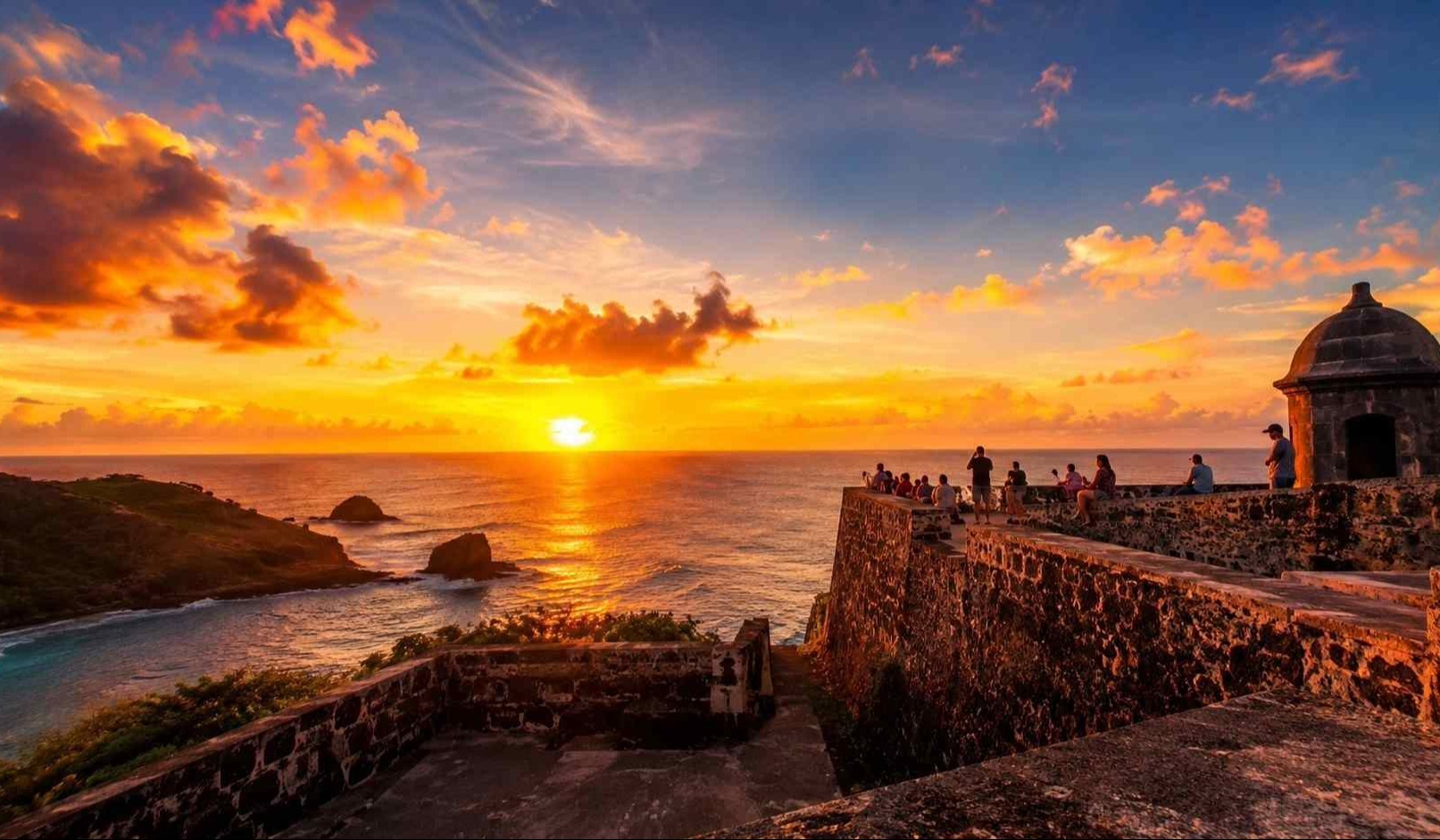
Pro Tip: We found that renting a buggy was the best way to combine a visit to Tamar with a trip to nearby beaches like Conceição and Boldró for a spectacular sunset view over the ocean.
GETTING THERE — FLIGHTS AND LOGISTICS
Daily flights depart from Recife (1 hour 10 minutes) and Natal (1 hour) — the two gateway cities. No direct international flights exist, so connect through São Paulo or Rio de Janeiro. The archipelago limits daily visitors to protect the ecosystem, so book flights and accommodation well in advance, especially during December–March peak season.
While the visitor center is the heart of the project, the real magic happens in the water.
Related Story: BAIA DOS PORCOS GUIDE: BRAZIL'S HIDDEN GEM
BEYOND THE VISITOR CENTER: SWIMMING WITH TURTLES IN FERNANDO DE NORONHA
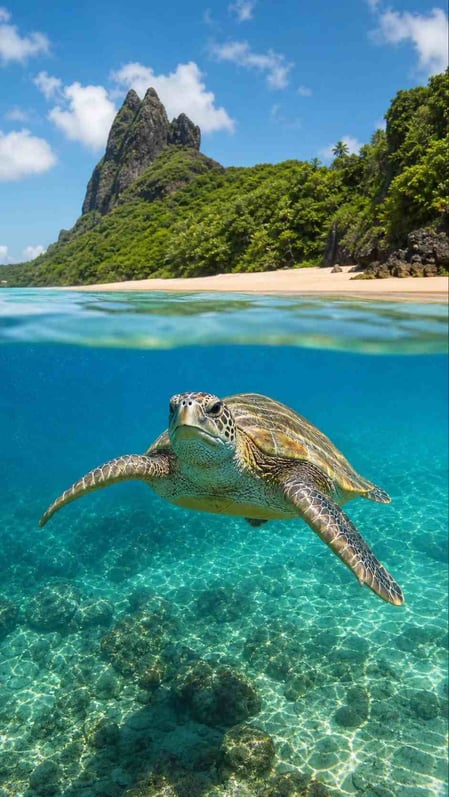
One of the most sought-after experiences on the island is swimming with turtles in Fernando de Noronha, an activity made possible by the conservation success of the Tamar Project. Thanks to decades of conservation work by Tamar Project Fernando de Noronha, the turtle population is thriving, making natural and respectful encounters in the wild very common.
THE BEST SPOTS FOR A TURTLE ENCOUNTER
This isn't an organized program where you touch or feed the animals. Instead, it's about respectfully sharing the water with them in their natural habitat. The best places for sightings are:
- Baia do Sueste: This calm bay is a famous feeding ground for Green Turtles. You can easily snorkel from the shore and will almost certainly spot several turtles grazing on seagrass.
- Praia do Sancho: Voted one of the world's best beaches, its clear waters are also a fantastic place to spot turtles, rays, and even dolphins.
- Baia dos Porcos: A secluded cove with natural rock pools ideal for snorkeling alongside hawksbill turtles.
Local divemasters and Tamar researchers agree: the best way to see a turtle is to stay calm, keep your distance, and let it come to you. Remember these simple rules for responsible viewing:
- Never touch or chase a turtle.
- Keep a respectful distance of at least a few meters.
- Do not block their path to the surface, as they need to breathe.
ISLAND TOURS AND CULTURAL EXPERIENCES
Island boat tours circle the archipelago's 21 islands, offering views of volcanic rock formations and frequent dolphin sightings. Rent a dune buggy to explore independently — the main island is small enough to cover in a day. And don't miss the local Pernambuco-style seafood: fresh lobster and tapioca crepes deliver an authentic gastronomic experience you won't forget.
Explore our full list of Fernando de Noronha's best beaches →
Every one of these experiences exists because of decades of conservation work. Still have a few questions? We’ve got you covered.
FREQUENTLY ASKED QUESTIONS ABOUT TAMAR PROJECT
What is the Tamar Project in Fernando de Noronha?
It's a world-renowned sea turtle conservation and research center. Part of a nationwide Brazilian project, the Fernando de Noronha base is a "living laboratory" due to the clear waters. It features a visitor center with a museum, tanks, and educational talks to raise awareness and funds for protecting the five endangered sea turtle species in Brazil.
When is the best time to visit Tamar Project to see turtles?
You can see turtles in the visitor center tanks year-round. However, for the best chance to witness natural phenomena, visit during the nesting season from December to June. This period offers the possibility of seeing hatchlings being released into the ocean, a truly magical experience.
How much does it cost to enter the Tamar Project in Fernando de Noronha?
Entry fees are very reasonable and contribute directly to conservation. Prices can change seasonally, so it's best to check the official Tamar Project website or inquire locally upon arrival for the most current ticket prices. Your contribution makes a real difference.
Can you swim with turtles in Fernando de Noronha?
Yes! Fernando de Noronha is one of the best places in the world for natural, respectful turtle encounters. You can often see them while snorkeling or diving at spots like Baía do Sueste. Remember to keep a safe distance and never touch the animals. The healthy population you see is a testament to Tamar's success.
Is visiting Tamar Project worth it?
Absolutely. It's more than just an attraction; it's an inspiring and educational experience that connects you to the island's incredible marine ecosystem. It's a top activity for families, nature lovers, and anyone interested in learning more about multicultural travel in Brazil. Your visit is both enjoyable and impactful.
A VISIT THAT STAYS WITH YOU
A tour to the Tamar Project Fernando de Noronha is a highlight of any visit to this Brazilian paradise. You'll leave with a deeper appreciation for the island's fragile ecosystem and the incredible work being done to protect it. It’s a powerful reminder that travel can be a force for good.
Leaving Fernando de Noronha, the memories of its golden beaches and turquoise waters will stay with you. But the memory of looking into the ancient eyes of a sea turtle—and knowing you played a small part in its future—is the kind of souvenir that truly lasts a lifetime. It’s a story you’ll be proud to tell.
Your journey into Brazil's natural wonders doesn't have to end here. If you were inspired by the story of Tamar Project, explore our other multicultural travel experiences in Brazil and plan a trip that's as meaningful as it is beautiful.
Have you visited the Tamar Project in Fernando de Noronha? Share your favorite memory or ask any questions in our social media below! We love hearing from fellow travelers. If you found this guide helpful, share it with a friend who dreams of Brazil. Let's inspire more travelers to visit this incredible place responsibly. See you on your next multicultural travel. Bye! 🐢
Summarize this article with:
 ChatGPT
 Claude
 Perplexity
 Gemini
 Grok
Grok
This article was written with 🤖 AI-Assistance, edited by humans.
Home > Stories > Tamar Project Fernando De Noronha: An Insider's Guide
SEA TURTLE CONSERVATION BRAZIL WHAT TO DO IN FERNANDO DE NORONHA PROJETO TAMAR VISITOR CENTER FERNANDO DE NORONHA ECOTOURISM SEA TURTLE MUSEUM FERNANDO DE NORONHA TURTLES IN FERNANDO DE NORONHA ECO-RESPONSIBLE TRAVEL BRAZIL